Entradas

Tony Blair propone ponerse duro con la inmigración para evitar el Brexit

Imagen
Partidarios de la Unión Europea se manifiestan ayer en Londres. WILL OLIVEREFE 9Ver comentarios Paradójicamente, Blair fue el primer ministro que avaló la política de fronteras abiertas durante su legislatura. El texto, que lleva como título "Sólo se ofrece un Brexit duro y eso causará un inmenso daño a Reino Unido", pretende ofrecer una alternativa que satisfaga tanto a partidarios del Leave como del Remain para evitar un proceso que parece ya imparable.El ex primer ministro británico, Tony Blair, ha pedido en un artículo publicado hoy por el Sunday Times el endurecimiento de la política de inmigración de Reino Unido como única vía para detener el Brexit. "No podemos plantear alternativas al Brexit sin afrontar los problemas que lo han provocado", defiende. "Paradójicamente, tenemos que respetar la decisión del referéndum para cambiarla. Es posible reducir las cosas que la gente siente que le está dañando de la inmigración europea haciendo camb...

Under pressure from all sides

Imagen
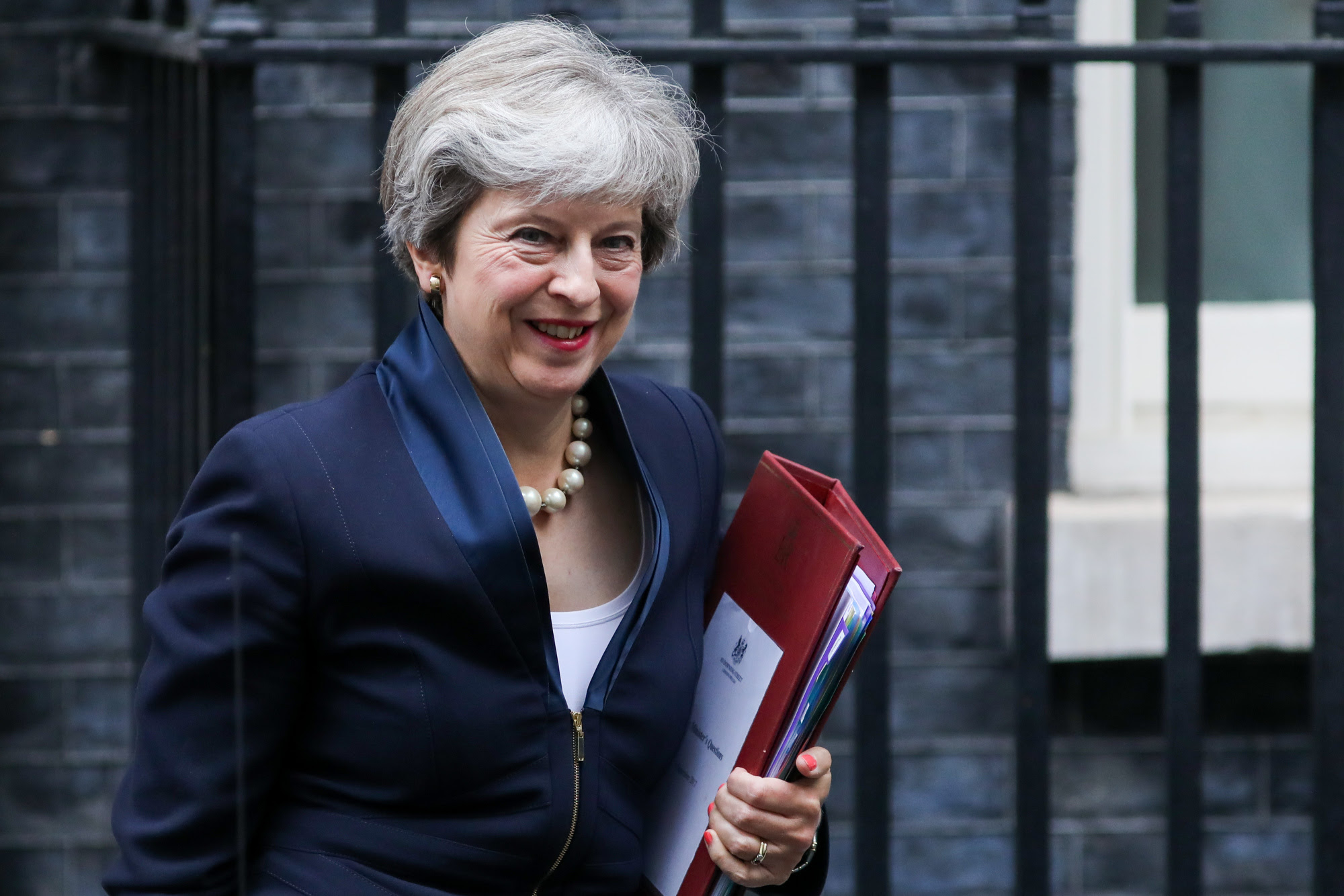
If Theresa May ever thought getting out of the European Union required only negotiating with Brussels she received a sharp wake-up call this week . Underscoring how many constituencies she must appease to deliver Brexit, the U.K. prime minister finds herself under pressure not just from the EU but also from British politicians of the left and the right, as well as business leaders. Chief EU negotiator Michel Barnier on Thursday highlighted the depths of his frustration and of the division between the two sides. He accused the U.K. of reneging on promises over a divorce payment and said he was worried by May’s approach to the Irish border. In a reworking of the refrain that the U.K. can’t “have its cake and eat it,” Barnier rejected the possibility of combining “the benefits of the Norwegian model with the weak constraints of the Canadian model.” Minutes from a European Commission meeting in July highlighted the tensions. They quoted Commission President Jean-Claude Jun...

Return of the cliff edge?

Imagen
Leaked immigration proposals for post-Brexit Britain threaten to complicate the U.K.’s withdrawal from the European Union. The draft, which is not final government policy, declared “free movement will end” as soon as the U.K. leaves the bloc on March 29, 2019. Those arriving in Britain after then might be obliged to register if they want to stay and would be subjected to stricter rules if they want to be joined by non-British family members. Their ability to remain will depend on skill levels, it said. Businesses were quick to express their displeasure even as Prime Minister Theresa May called on them to train more British workers to fill vacancies. The Daily Telegraphreported Home Secretary Amber Rudd had distanced herself from the document. The blueprint won’t go down well with the EU either, and could cost Britain the transition period it is seeking, reported Bloomberg’s Ian Wishart. The region’s governments would probably insist that any interim arrangemen...

Brexit will not be easy

Imagen
U.K. Prime Minister Theresa May needs to brace for a tough autumn as the obstacles to her Brexit planning mount. The first challenge comes from the European Union. Bloomberg’s Birgit Jennen reports how the bloc’s deputy Brexit negotiator, Sabine Weyand, this week told German lawmakers she’s skeptical the two sides will be able to start crafting a trade deal in October as initially hoped. Her boss, Michel Barnier, will on Wednesday brief ambassadors from the 27 EU member states in Brussels. Back in London the opposition Labour Party is seeking to block May’s blueprint for a post-Brexit legal regime . Without a majority in Parliament, May is also vulnerable to rebels from her own Conservative side. As the government tries to transfer 12,422 pieces of EU law on to the British statute book, Labour is challenging a proposal to allow ministers to revise some of the rules without full parliamentary scrutiny. Some Tories, including former Attorney General Dominic Grieve, have als...

An important intervention

Imagen
Theresa May will try to lift the tempo of the Brexit negotiations with a speech in late September . Largely quiet since returning from her summer break, the British prime minister will use the address to explain how a raft of position papers recently published by the government offers a vision of a “deep and special partnership” with the European Union. She will make the case for non-stop talks aimed at paving the way for a long-term trade deal. The European Parliament’s Brexit coordinator, Guy Verhofstadt, appeared to give the date away on Monday when explaining to lawmakers in Brussels why the next round of talks could be pushed back a week. “Apparently there will be an important intervention by the British prime minister in the coming days, foreseen on Sept. 21, and then it’s a little bit stupid that there is this mixed with the negotiation round.” The U.K. refused to confirm the delay in negotiations and an official said the Belgian politician was wrong on the date...

A Catalonian split from Spain could be even worse than Brexit

Imagen
LONDON — If the Spanish region of Catalonia breaks away from Spain in a so-called "Catalexit", it would plunge the region into a long period of uncertainty and could end up having negative effects that "proportionally exceed" those of Brexit according to Dutch bank ING. Catalonia aims to hold a referendum at the beginning of October to decide whether or not the region — which includes the city of Barcelona — should declare independence from Spain. The region has engaged in a long battle to preserve its cultural identity. Whether or not that referendum takes place remains up in the air, but if it does, the consequences could be huge. "As with Brexit, we believe that any Catalexit would plunge the region into a long period of uncertainty and would most probably be negative for the private sector," ING economist Geoffrey Minne writes in the note titled "Catalonia: the cost of being single." The movement for Catalan independence ...

Brexit is all about bills again.

Imagen
The first is, of course, the infamous one the European Union wants the U.K. to pay to settle its financial accounts with the bloc. Newspaper reports at the weekend suggested Prime Minister Theresa May was set to approve paying as much as £50 billion ($68.5 million). Under that formula Britain would send to £17 billion a year to Brussels for three years after Brexit, ending payments ahead of the 2022 general election, the Sunday Times said. That kind of amount may help break the deadlock between the two sides and pave the way to a trade deal, but Brexit Secretary David Davis called the report “nonsense” and “completely wrong.” The British are seeking a faster pace of talks over the coming months in order to make a deal. Davis accused the EU of trying to “play time against money” and told the BBC’s Andrew Marr on Sunday that its pressure tactics “looked a bit silly.” Speaking in Washington on Friday, he hinted at the idea of linking the divorce bill to securing a transiti...