Entradas

Mostrando las entradas etiquetadas como nacionalidad espanola

Not today

Imagen
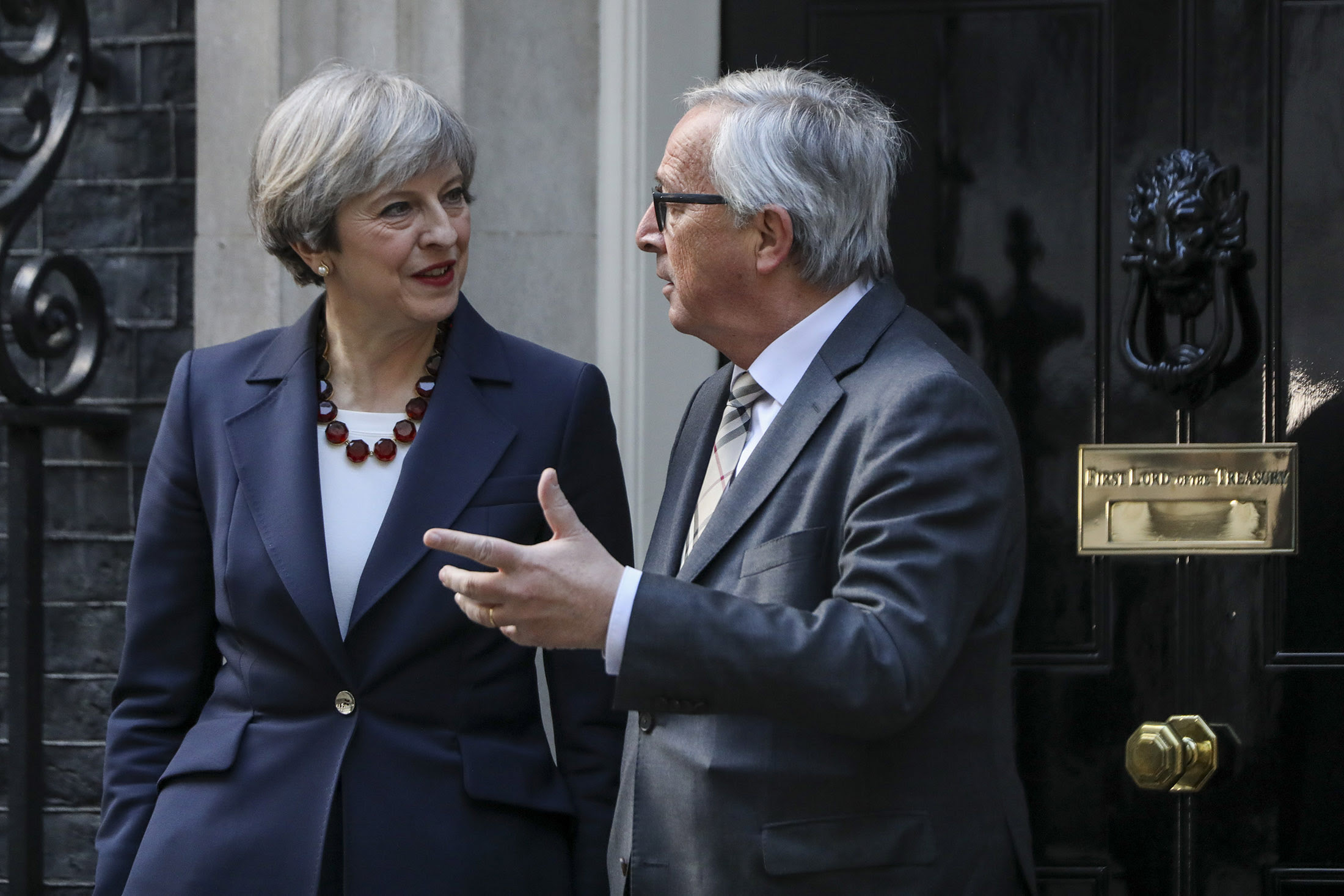
Once flagged as the moment when a Brexit deal could start coming together, a lunch between Prime Minister Theresa May and European Commission President Jean-Claude Juncker in Brussels on Monday won’t be the breakthrough some hoped as recently as a week ago. U.K. officials are managing down expectations. It’s not just that a deal on the Irish border remains elusive. The issue of what role the European Court of Justice can have post-Brexit has re-emerged as a major stumbling block after a weekend of intense back-and-forth, according to people on both sides. The ECJ has totemic importance for the Brexit backers in May’s Conservative Party, who see it as a symbol of lost sovereignty. On the EU side, it’s a possible deal-breaker as the veto-wielding European Parliament has made clear the court must have a role in protecting the rights of EU citizens living in the U.K. after Brexit. May is ready to compromise, enraging some party members, but her offer may not go far enough for the...

Stepping forward

Imagen
Theresa May won backing from key ministers to improve her offer on the Brexit divorce bill to about £40 billion ($53 billion), ITV News reported. Now the prime minister wants to make sure she’ll get something in return before putting the offer on the negotiating table. May – who hasn’t said anything publicly about the size of a new offer – keeps saying the “U.K. and the EU should step forward together.” That means she doesn’t want to make an offer on the money unless she’s sure she’ll get the green light for trade talks to start in return. It could cost her her job otherwise, as plenty of lawmakers – and voters – don’t think Britain should be paying anything like the sums Brussels is demanding. ITV’s Robert Peston also reported that a key group of ministers agreed that the European Court of Justice will have a role after Brexit for EU citizens. If confirmed, that would be a major breakthrough on citizens’ rights, one of three sticking points blocking the move from divorc...

Brexit talks have reached a deadlock.

Imagen
Brexit talks have reached a deadlock, and the U.K. is pinning its hopes on European leaders to find a way out. The problem is no-one in Europe really wants to help. EU chief negotiator Michel Barnier said he was convinced that “with political will” progress is “within our grasp” in the next two months. The Brits understood his comments as an “ elegant cry for help ” aimed at European leaders, Bloomberg’s Tim Ross reports. Others saw it differently, with the onus put firmly on the U.K.’s squabbling government to find something else to offer. As EU leaders prepare to meet next week at the summit that was initially penciled in as the start of trade talks, the 27 countries are maintaining a united front. Their position is unchanged: the U.K. needs to make clear its intentions on the financial settlement before the future relationship can be discussed. Prime Minister Theresa May is vulnerable, and could even be toppled and succeeded by a hardliner, but even that prospect is...

Project Fear

Imagen
The U.K. is stepping up its  plans for a no-deal Brexit . As the government tried to present a united front during the Tory party conference, Brexit Secretary David Davis’s message to the faithful was that the government has a “determined exercise” under way so that it’s ready for the worst if talks fail. “Not because it’s what we seek, but because it needs to be done.” In private too, senior officials are growing concerned that the EU’s refusal to move talks on to trade—with just 18 months to go until Britain leaves—will make a deal impossible before the deadline, Bloomberg’s Tim Ross reports. Leaving the EU without a deal would be catastrophic for business, throwing industries from financial markets to air travel and pharmaceuticals into legal limbo. After decades under European rules, trading terms would revert overnight to World Trade Organization tariffs, and trucks could pile up at ports awaiting customs checks. Playing to the domestic audience, U.K. mini...

Boris Johnson embarca a los ‘tories’ en su visión optimista del Brexit

Imagen
El díscolo ministro de Exteriores firma la paz con Theresa May e inyecta moral al Partido Conservador. El Partido Conservador llegó a Manchester hundido. Precedido de protestas callejeras, golpeado en las elecciones de junio, incapaz de desbloquear las negociaciones en Bruselas, envuelto en una guerra del Brexit, con una primera ministra desautorizada y una oposición crecida. Hasta que llegó Boris Johnson. El ministro de Exteriores, en su discurso ante el congreso tory, ha embarcado este miércoles al partido en su visión optimista del futuro del país. Ha ofrecido todo su apoyo a una primera ministra a la que lleva semanas desafiando. Y se ha ganado la autoridad para seguir marcando, desde la retaguardia, la agenda del Brexit. “Es hora de dejar de tratar el resultado del referéndum como si fuera la plaga de las úlceras o una peste bovina o una aberración inexplicable a cargo de 17,4 millones de personas [las que votaron por el Brexit]. Es la hora de ser audaces y aprovech...

A concession?

Imagen
For all the fighting talk at the start of the fourth round of Brexit negotiations, the EU is now considering a concession . Moving talks on to trade next month looks all but out of reach, but Bloomberg’s Ian Wishart and Viktoria Dendrinou report that EU governments may allow negotiations about the transition period to be brought forward. It’s a minor concession and the two sides remain far apart on some key issues, but movement on an issue that’s so crucial for U.K. businesses would ease negotiations over the bill. It would also show that Prime Minister Theresa May’s speech in Florence last week hit at least some of the right notes in Europe. The concession could see chief negotiator Michel Barnier handed an amended mandate. When EU leaders meet at a summit in October they may allow Barnier to address the transition alongside the divorce, according to people familiar with the situation. Initially any transition was meant to be debated only after the divorce had been settle...

The bill is getting bigger

Imagen
The Brexit bill might just have got even bigger. As negotiators haggle line by line over what each side thinks Britain should pay when it leaves, the latest budget data include some unwelcome numbers. The European Union’s liabilities grew almost 4 percent in 2016, with the cost of pensions for EU officials and lawmakers rising more than 5 percent, according to budget documents obtained by Bloomberg’s Ian Wishart and Marine Strauss. Pension costs are already one of the trickiest bits of the bill—Brexit Secretary David Davis called them “debatable” at the weekend—and the latest data will sharpen that debate. Swelling EU costs will also provide fodder for British euroskeptics who would rather Britain walked away without paying anything, and who object to Prime Minister Theresa May’s offer to keep paying into the EU budget for two years after Brexit.  Negotiators need to take into account costs that will continue to rise until then, not just current liabilities. That’s wh...

Back to square one?

Imagen
Minutes into the fourth round of Brexit talks, which started in Brussels on Monday, Britain’s Brexit Secretary David Davis shattered the illusion that the U.K. was ready to play by the EU’s rules on the divorce bill. Whatever Prime Minister Theresa May said in Florence last week about meeting the U.K.’s financial commitments, Davis made it clear Britain will only pay up if it gets the final deal it wants.  “It’s obvious that reaching a conclusion on this issue can only be done in the context of, and in accordance with, a new deep and special partnership with the EU,” Davis said, standing alongside EU chief negotiator Michel Barnier, who has made it clear the bill needs to be sorted first. Watch: Barnier Demands Brexit Clarity from U.K. Even before Davis arrived in Brussels, European affairs ministers briefed by Barnier were skeptical that EU leaders will be able to sign off on talks moving on to the trade deal Britain wants in October, according to people in the m...

Brexit: The clock is still ticking...

Imagen
Theresa May’s big Brexit speech had been talked up for weeks . It even overshadowed, and eventually led to the cancellation of September’s round of talks in Brussels. The mere prospect of it spurred Boris Johnson to rebel, leading to days of intrigue at the United Nations before the prime minister and her top diplomat patched things up on the way home. After all that, what did the prime minister deliver in Florence?   She proposed for the first time that the U.K. would seek a transitional arrangement to smooth the path after the date of Brexit (March 29, 2019, in case it slipped your mind). That period could last “about two years,” May said. She also pledged that the U.K. would honor its existing commitments to the European Union budget. “I do not want our partners to fear that they will need to pay more or receive less over the remainder of the current budget plan as a result of our decision to leave,” May said in the Tuscan capital. “The U.K. will honor commit...